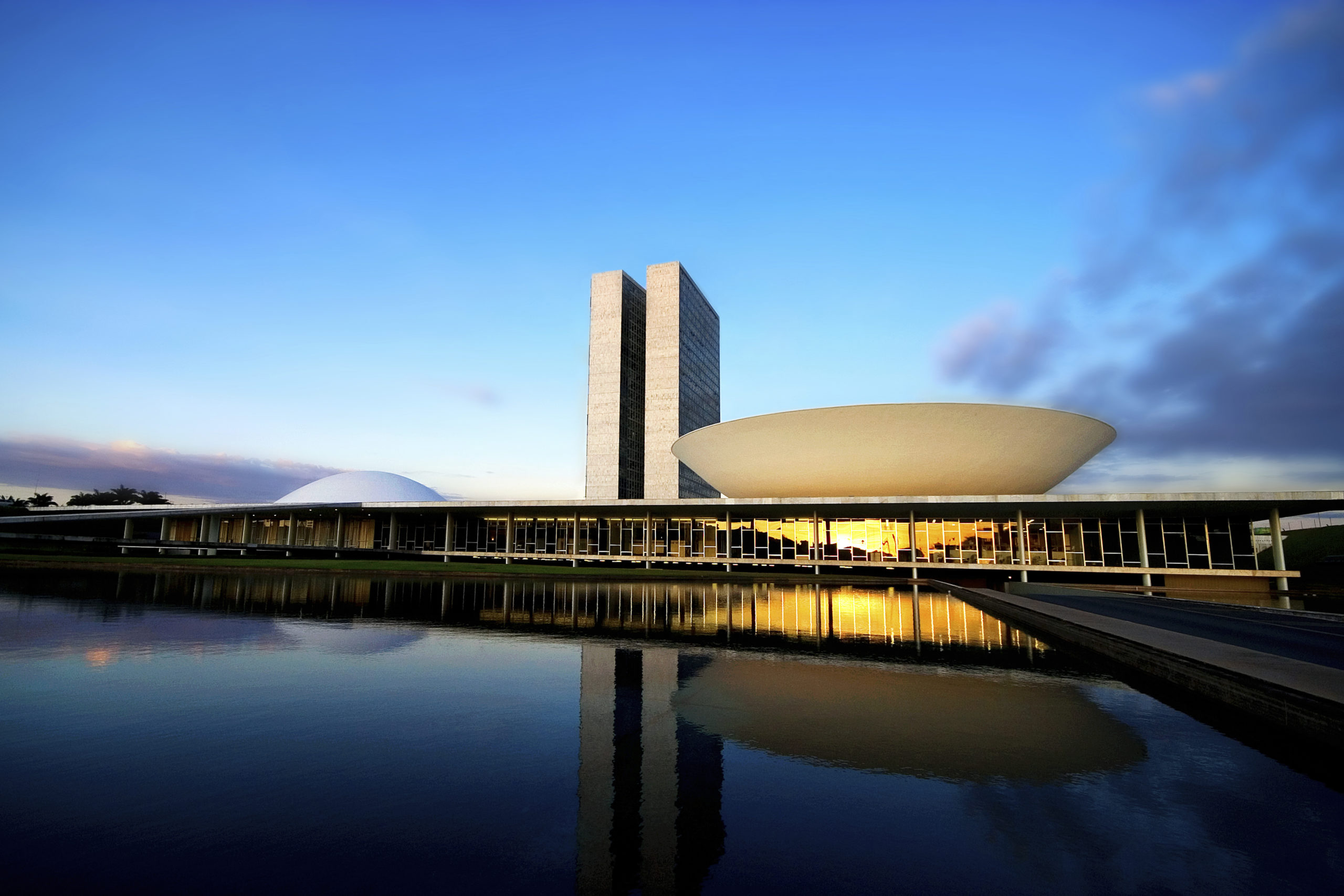
- Decree No. 11,546/2023: creates the National Council for the 30th Conference of the Parties of the United Nations Framework Convention on Climate Change (“UNFCCC


The Federation of Brazilian Banks (“FEBRABAN“) has recently approved Regulation No. 026/2023, setting forth guidelines and procedures for Brazilian banks when financing the beef industry, particularly slaughterhouses. Pursuant to the new self-regulation, as of 2025 financing should only be available to slaughterhouses that put into place a due diligence system for tracing and monitoring the activities of direct and indirect suppliers, certifying that no illegal deforestation has occurred in its supply chain. The self-regulation only applies to slaughterhouses located in the states that compose the “Amazônia Legal” and the state of Maranhão.Continue Reading Federation of Brazilian Banks tackle illegal deforestation in the beef supply chain
On December 27, the Brazilian Presidency issued Provisional Measure No. 1,151/2022, which, among other provisions, amended Laws No. 11,284/2006 (Public Forests Management Act) and 11,516/2007 (ICMBio Creation Act) to enable the development of carbon credit projects and other environmental services in conservation units, through concessions.
Continue reading at Mayerbrown.com.

On 6 December 2022, the Council of the European Union (the “Council“) and the European Parliament (the “EP“) reached a provisional agreement on a proposal to minimise the risk of deforestation and forest degradation with products that are imported into, or exported from, the EU (the “Agreed Position“). The

The 15th meeting of the Conference of the Parties to the United Nations Convention on Biological Diversity (COP15) is taking place in Montreal, Canada, until next Monday (December 19). It has been attracting much attention due to negotiations on the Post-2020 Global Biodiversity Framework (GBF), which is hoped to be agreed upon in the next few days. This would be an important milestone has base been described as the “biodiversity equivalent of the 2015 Paris Agreement on climate change”. The aims is to halt and reverse biodiversity loss by 2030 and establish long-term goals by 2050.Continue Reading Observations from the COP15 (Biodiversity Conference) Halfway Point

COP27 has now come to a close. Against the global backdrop of political and economic turbulence, many questions were asked as to what could realistically be expected as outcomes of COP27. We now have the answers to those questions.Continue Reading COP27 Postscript – much ado about nothing?
We are half way through COP27, so (disregarding the intersessionals that will take place during 2023), the negotiations will “soon” start to focus on Dubai, the venue for next year’s COP28 summit. Who knows how much progress will be made before then. One point to note is that COP27 is more of an “implementation” COP, rather than one with a more grandiose task, such as ramping up climate ambition.Continue Reading Observations from the COP27 Halfway Point

Litigation is increasingly being used as a means of advancing – or delaying – effective climate action.
As discussed in our recent legal update on the Grantham Research Institute on Climate Change and the Environment’s 2021 Global Trends in Climate Change Litigation Policy Report (the “2021 Report“), between 2015 and 2021, there was a marked increase in the number of such climate-related cases being brought against private sector actors. This reflects the growing recognition by prospective litigants of litigation as an effective means of influencing the actions private sector actors are taking to address climate change.
Most recently, the London School of Economics’ Grantham Research Institute on Climate Change and the Environment’s 2022 Global Trends in Climate Change Litigation Policy Report (the “2022 Report“) confirms that litigation against private sector actors continues to expand as an avenue for climate action. We discuss the trends identified in the 2022 Report in this blog post.Continue Reading The Grantham Research Institute on Climate Change and the Environment publishes its 2022 global trends in climate litigation report

On 29 June 2022, the Brazilian Superintendence of Private Insurance (“SUSEP”) published Regulation No. 666/2022, setting forth sustainability requirements applicable to the Brazilian insurance sector. Its goal is to establish guidelines for management of risks that are directly related to ESG policies of insurance and capitalization companies, local reinsurers and pension funds.Continue Reading Brazilian insurance regulator publishes guidelines on sustainability requirements for the insurance sector
On 1 July 2022, the Brazilian Supreme Court issued a ruling on ADPF 708 (Ação de Descumprimento de Preceito Fundamental), which is another climate litigation case under the court’s scrutiny (please read here and here for more information about other climate litigation cases submitted to the Brazilian Supreme Court). In summary, political parties filed ADPF 708 in June 2020, claiming the Brazilian Federal Administration had not taken appropriate measures to ensure allocation and use of funds from the Brazilian Climate Fund, which is supposed to play an important role in “climate financing”, pursuant to the Paris Agreement, by supporting climate change mitigation projects in Brazil.Continue Reading BRAZILIAN SUPREME COURT RECOGNIZES THE PARIS AGREEMENT AS A HUMAN RIGHTS TREATY